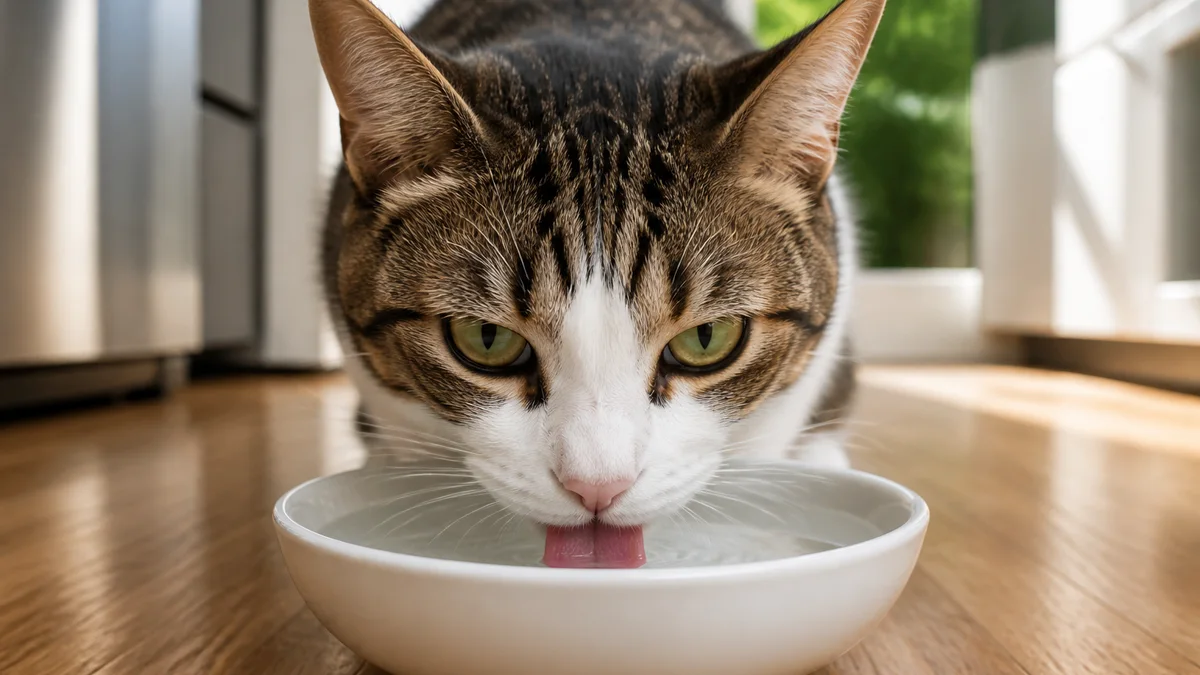
Cats evolved as desert-adapted drinkers—they often take in less water than dogs relative to body size. Domestic shorthairs and longhairs alike may drink less when bowls sit near litter or warm up in sun. In hot, humid Philippine weather, small hydration habits at home can make a meaningful difference.
Why hydration matters in tropical homes
Indoor cats may drink less when bowls are placed near litter, when water sits warm by a sunny window, or when they eat only dry kibble. Chronic low intake can contribute to urinary issues over time, though individual risk varies by age, diet, and health history.
Set up multiple water stations
- Place bowls in quiet corners away from litter and loud appliances.
- Refresh water at least twice daily during hot months.
- Try wide, shallow bowls—some cats dislike whisker contact on narrow rims.
- If your cat prefers running water, a small fountain can help—clean it regularly.
Use wet food as part of the plan
Wet food adds dietary moisture. It is not a substitute for fresh water, but it can support overall intake. Transition gradually if changing brands to avoid digestive upset.
Support cooling without panic
Provide shaded resting spots, cross-ventilation where safe, and tile or cool mat areas. Avoid forcing ice packs or cold baths. Groom long-haired cats more often during humid stretches.
Track subtle changes
Note litter clump size, urine frequency, and energy levels. Increased thirst with weight loss, or reduced urination with straining, warrants prompt veterinary assessment.