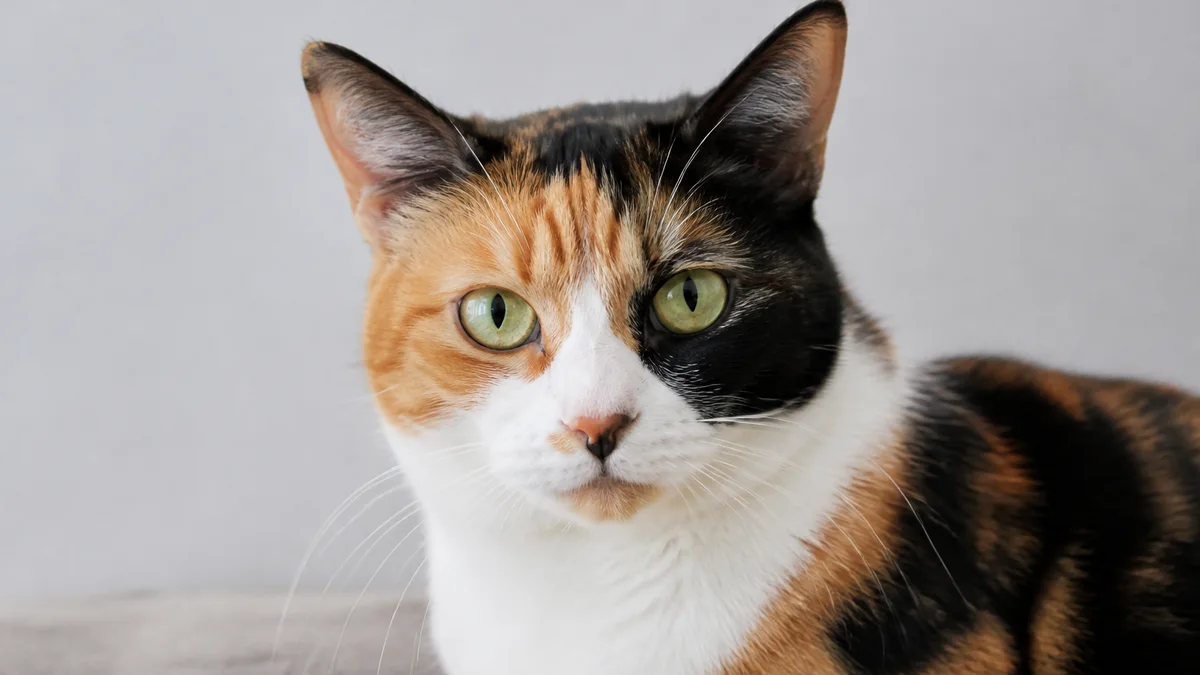
“Calico” describes a patchwork coat—not a single breed standard. You may see the pattern on mixed-breed cats and on pedigreed lines such as the British Shorthair, American Shorthair, or Japanese Bobtail—but the label still refers to colour, not breed.
Pattern vs breed
People sometimes treat “calico” like a breed name. In practice it is a colour pattern: distinct patches of orange (or cream), black (or grey), and white. Personality and care needs follow the individual cat’s age, health, and coat length—not the pattern label.
The familiar three-colour look
Orange tones come from one pigment pathway; black tones from another; white areas reflect absence of pigment in the fur due to other genes. Diluted calicos show softer grey and cream instead of stark black and orange.
Genetics in plain language
Orange and black coat colours in cats are largely linked to the X chromosome. Because most females have two X chromosomes, they can express both colour pathways in different skin regions—creating patches. A process called X-inactivation helps determine which colour appears in each area during development.
For a deeper read, see the calico cat overview on Wikipedia as a starting reference—not a substitute for veterinary advice.
Why most calicos are female
Most calico cats are female because the common genetic combination for the classic pattern involves two X chromosomes. Male calicos are uncommon and often relate to rare chromosome combinations; they may have additional health considerations—your veterinarian can explain what applies to a specific cat.
What care actually depends on
Coat length, age, indoor versus outdoor lifestyle, and medical history drive grooming and feeding plans. A calico label does not require a special diet. Brush according to coat type, keep litter and water routines steady, and schedule regular veterinary check-ups like any other cat.