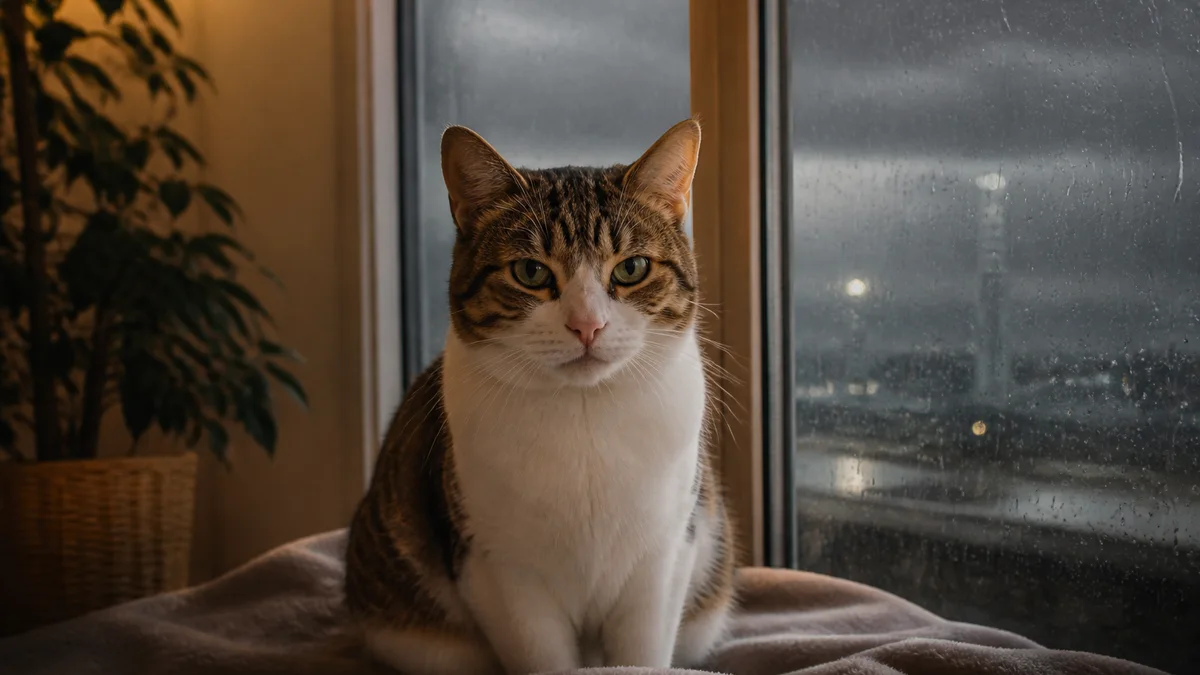
In much of the Philippines, rainy season is not a single afternoon shower—it is weeks of heavy habagat rain, thunder, leaking roofs, flooded streets, and sudden typhoon warnings that change plans overnight. Indoor cats do not get wet on the commute home, but they still feel the season through noise, humidity, unstable routines, and the stress that travels through the household. This guide is a practical preparedness plan for cat guardians in condos, townhouses, and family homes who want to keep cats safe, fed, and as calm as possible when the weather turns severe.
Why rainy season is a cat-care season, not just a weather headline
Cats are creatures of routine. They notice when feeding times slip because you came home late through flooded roads. They react when windows rattle, when the power cuts out and fans stop, and when unfamiliar footsteps move furniture toward doorways. For many Philippine homes, the season also brings indirect hazards: roof leaks near litter areas, damp walls that encourage mould, mosquitoes and fleas in humid corners, and difficulty reaching a veterinary clinic when streets are impassable.
The goal is not to eliminate every stressor—storms are loud and disruption happens. The goal is to reduce preventable problems: a cat trapped on a balcony when wind slams a door, litter placed where water pools, or a two-day food gap because supplies were never stocked. Thinking ahead turns an anxious week into a manageable one.
This article focuses on indoor cats. If you care for community cats or outdoor-access pets, local welfare groups such as the Philippine Animal Welfare Society publish broader guidance on shelter and feeding strategies. For your indoor companion, most of the work happens inside four walls you can control.
Before the storm: a two-tier checklist
Split preparation into a season baseline (done once, maintained lightly) and a typhoon watch list (when PAGASA raises signals or your barangay starts clearing drains). You do not need to panic-buy; you need predictable reserves and a clear place for the cat to stay.
Season baseline (keep these steady from June onward)
- Extra litter—enough for one to two weeks if delivery is delayed.
- Extra food: dry in sealed containers; wet pouches or cans with long dates.
- Bottled or stored drinking water reserved for pets if tap quality varies during outages.
- Carrier accessible, not buried in storage; soft bedding inside that smells familiar.
- Photocopy or phone photo of vaccination records and clinic contact numbers.
- Flea and parasite prevention current—humidity revives dormant pest cycles in some homes.
Typhoon watch (24–48 hours before expected impact)
- Move litter, food, and resting spots away from known leak zones and exterior walls that feel damp.
- Charge power banks; identify the coolest interior room if air-conditioning will stop.
- Trim or secure loose items on balconies—cats should not have balcony access during high wind.
- Confirm with household members who is responsible for the cat if schedules change or evacuation is ordered.
- Pre-portion meals in containers if you expect frantic hours when the storm arrives.
Building safe indoor zones
A safe zone is not a cage—it is a predictable micro-territory with food, water, litter, hiding, and a low-traffic path for you to check in. During storms, choose a room that stays temperate, has no balcony access, and can be closed if contractors or neighbours create commotion in hallways.
Place a hiding option the cat already uses: a covered bed, box, or space under a desk. Avoid forcing a brand-new enclosed carrier as the only hide—some cats refuse to enter unfamiliar boxes when afraid. If you only have a carrier, leave it open with bedding inside and do not latch the door.
Scratching surfaces should stay available. Stress scratching increases when routines break; punishing the behaviour adds fear. A vertical post or cardboard scratcher near the safe zone gives an outlet.
Window safety matters year-round but deserves a rainy-season audit. Screens should be secure; some older sliding windows gap when wind pressure changes. Cats can push through damaged mesh when startled by thunder. If you use absorbent towels along sills during heavy rain, keep them from blocking a cat’s escape route if you need to move quickly—towels are for water, not for sealing a cat into a wet area.
Food, water, and litter when schedules collapse
Brownouts and flooded roads disrupt the simple rhythm of scooping litter at dusk and topping up kibble. Plan for manual continuity: enough supplies on hand that one missed grocery run does not become an emergency.
Water
Cats often drink less when water feels warm or when bowls sit near litter odours. During outages, room temperature rises quickly in Philippine homes. Refresh water more often; use multiple bowls in the safe zone. Wet food adds dietary moisture—useful in heat, but not a substitute for clean water. If your cat is on a prescription diet, stock extra cans before a forecasted week of heavy rain rather than assuming online delivery will arrive on time.
Feeding
Maintain meal times as closely as you can. If you normally free-feed dry food, consider measured portions during storm weeks so you can track appetite—a useful early signal when cats feel unwell. Sudden refusal to eat for more than 24 hours in an adult cat, or repeated vomiting, warrants a veterinary call when clinics are reachable.
The Cornell Feline Health Center offers clear owner resources on appetite changes and when they may indicate serious illness. Use them as background reading; your veterinarian still knows your cat’s history best.
Litter
Humidity slows clumping in some litters and intensifies odour. Scoop more frequently if the tray sits in a smaller closed room during a typhoon lock-in. If leaks drip near a tray, move it immediately—cats may refuse a box that smells contaminated or feels damp underfoot. Rule of thumb: one tray per cat, plus one extra, still applies when everyone is indoors full-time for days.
Brownouts, heat, and ventilation
When fans and air-conditioning stop, indoor temperature can climb within an hour, especially on upper floors with west-facing windows. Cats dissipate heat poorly compared with humans; they rely on shade, still air, and reduced activity. Your safe zone should shift toward the coolest part of the home—often an interior bathroom or hallway tile, not the glass-heavy living room.
- Close curtains on sun-facing windows; leave interior doors open for air movement.
- Offer tile or cool floor access; many cats sprawl on bathroom floors during hot afternoons.
- Avoid locking cats in small rooms without airflow unless necessary for safety.
- Watch for panting, drooling, or lethargy—heat stress is an emergency. Seek veterinary help if breathing looks laboured.
Battery-powered LED lights are gentler than sudden darkness when power cuts. A night-light in the safe zone helps older cats with vision changes navigate without bumping into furniture when storms arrive at dusk.
Stress, noise, and behaviour changes
Thunder, wind whistle, and metal roof rattling are common triggers. Some cats freeze; others run, hide, or vocalize. A few may redirect aggression toward other pets or humans when panicked. Expect temporary changes: reduced play, clinging behaviour, or extra hiding for 24–72 hours after a severe night.
What helps most is predictability from you: speak softly, maintain feeding times, and avoid dragging a hiding cat into the open for comfort. Sit on the floor at a distance; let the cat choose to approach. Interactive play may wait until noise drops—forcing a wand toy during peak thunder often backfires.
Feliway-style diffusers or calming music are optional extras; evidence varies by cat. They are not replacements for physical safety and litter access. If your cat already takes anxiety medication, discuss storm plans with your veterinarian before season peaks—do not adjust doses on your own.
Long-haired cats, including some calico-pattern coats with dense fur, may mat more when humidity stays high and grooming decreases during stress. Gentle brushing when the cat is calm prevents painful tangles later—see our calico coat notes for coat-length considerations that apply to many breeds and mixed-breed cats alike.
Multi-cat households during lock-ins
When every cat is indoors for days, minor tensions can escalate. Ensure each cat can reach food, water, and litter without crossing another’s guarded corridor. In tight condos, stagger feeding stations—two bowls on one plate is not the same as two separate stations across the room.
Provide duplicate hiding spots at different heights. Vertical space reduces conflict: a cat tree shelf and a floor box hide allow two nervous cats to coexist without staring contests. If one cat is bullied away from litter, add a tray immediately rather than waiting until rain stops—holding urine increases medical risk, especially in males.
Introduction protocols for new adoptees should pause during typhoon week if possible. A first month in a new home is already demanding; stacking a major storm on top makes setbacks more likely. If adoption timing is fixed, prioritize the safe-room approach described in our rescue cat first-month guide.
After leaks, flooding, or roof damage
Once wind drops, inspect the cat’s zone before assuming all clear. Wet drywall, pooled water on tile, and exposed wiring from damaged fixtures are human hazards that also affect pets. Move litter and bedding away from damp patches to prevent mould and refusal behaviour.
If floodwater entered the ground floor, disinfect non-porous surfaces before letting cats return. Community flood water may contain sewage and chemicals. When in doubt, keep cats on an upper level until cleaning is complete. Wash food and water bowls that were splashed; replace cardboard scratchers that absorbed contaminated water.
Document damage for your household insurance if applicable, but prioritise drying and ventilation. Dehumidifiers and fans reduce the musty smell that makes cats avoid previously favourite rooms. Watch litter habits for the next week— stress cystitis and digestive upset often appear after major household disruption.
Evacuation and shelter-in-place decisions
Some barangays order evacuation when rivers rise. If you must leave, the cat goes in a carrier with a familiar blanket, vaccination copies, food for 48 hours, collapsible bowl, and any medication. Microchip and collar tags should be updated before season starts—not the morning of departure.
Not every evacuation centre accepts pets. Identify pet-friendly relatives, hotels, or boarding clinics along likely routes before typhoon season. Keep fuel or transport apps ready if your municipality historically floods. Practice loading the cat into the carrier during calm weather so the motion is not entirely novel during alarms.
If you shelter in place on an upper floor while streets flood below, treat the cat as you would during a long brownout: safe zone, litter maintained, noise management, and appetite monitoring. Avoid opening doors to balconies “for air” when wind gusts return between rain bands.
When to call a veterinarian
Storm weeks are the wrong time to ignore subtle symptoms, but clinics may operate reduced hours. Call early if you notice:
- Repeated vomiting or diarrhoea, especially with blood.
- Straining to urinate or crying in the litter tray—blockages can become fatal quickly in male cats.
- Laboured breathing, open-mouth panting at rest, or collapse.
- Refusal to eat for more than 24 hours in adults, or rapid weight loss in kittens.
- Injury from falling objects, broken glass, or electrical incidents during outages.
- Extreme lethargy after heat exposure when cooling measures were insufficient.
Keep your clinic’s emergency number saved offline—screenshots in your gallery survive dead batteries longer than bookmark apps without signal. If travel is impossible, some clinics offer tele-triage; they cannot diagnose through a photo alone, but they can prioritise whether an in-person visit is urgent.
A compact year-round rainy-season kit
Store these together in a labelled bin once, refresh twice a year:
- Carrier with familiar bedding.
- Seven-day food reserve rotated so dates stay fresh.
- Sealed litter bag and spare scoop.
- Bottled water dedicated to pets.
- Basic first-aid: gauze, pet-safe antiseptic suggested by your vet, disposable gloves.
- Copies of records; photo of your cat for identification.
- Battery light, spare power bank, and a list of pet-friendly contacts along evacuation routes.
Rainy season passes, but the kit stays useful for earthquakes, construction water shutoffs, and delivery delays unrelated to typhoons. Cats benefit when guardians treat preparedness as normal household maintenance—not as a sign that disaster is imminent.
If you are new to cat guardianship, pair this plan with our first-cat checklist, hydration guide for hot weather, and condo living tips—together they cover the daily baseline that makes storm weeks survivable rather than chaotic.
Severe weather is part of life in the Philippines. Indoor cats depend entirely on the plans you make before clouds gather. A safe room, stocked supplies, and calm consistency give them something storms cannot take away: a territory that still feels like home when the sky does not.